Qué pasó hoy? (vídeo)
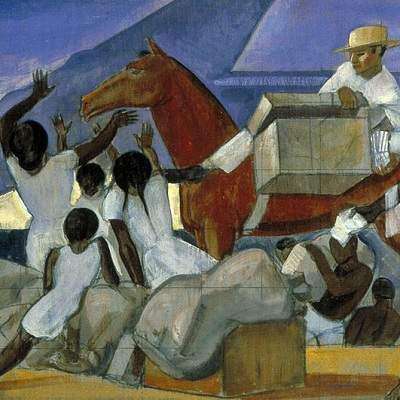
Sábado, 26 de noviembre de 2011 – Una deuda que jamás se pagará: El criptograma de ‘The Puerto Rican Mural’ sobrevive, mutilado, en el Ariel Ríos Federal Building en Washington, D.C.
‘El arte verdadero sólo ha podido existir, en (Estados Unidos), a título de rebelión individual. Emerson, Poe, son allí como los ejemplares de una fauna expulsada de su verdadero medio por el rigor de una catástrofe geológica.’ -José Enrique Rodón, en ‘Ariel’.
‘El arte es una mentira que nos acerca a la verdad.’ -Pablo Picasso
Un día como hoy, hace 74 años, uno de los célebres artistas estadounidenses y quien muchos consideran como el más destacado ilustrador del Siglo XX se vio compelido a proponer varias alternativas al mensaje en código que transmitió en el ‘Puerto Rican Mural’ que pintó en un edificio cuyo nombre y arte llegaría a constituir una de las metáforas más desgarradoras y conmovedoras de nuestra patria borincana.
En dicho mural, el artista Rockwell Kent pintó una escena que representaba un mensaje en el que la Nación Yupik (Esquimales del Sur de Alaska) le comunicaban lo siguiente a la Nación de Puerto Rico, en su lengua nativa, el Chukotga:
‘To the people of Puerto Rico, our friends. Go ahead, let us change chiefs. That alone can make us equal and free.’
El citado ‘criptograma’ (telegrama críptico) de parte de la brocha de ‘el Diego Rivera estadounidense’ causó un escándalo de grandes proporciones. Luego de que se descubrió el contenido del mensaje, éste se discutió extensamente en publicaciones de difusión masiva tales como Time Magazine y The New York Times. No se trataba de cualquier artista ni de cualquier edificio. Rockwell Kent era el ilustrador más destacado de su era y ganó gran fama por las imágenes que le dieron vida al clásico Moby Dick. El edificio en cuestión era el ‘U.S. Postal Building’ en 1200 Pennsylvania Ave., Washington, D.C., cuando el correo de dicha nación era la agencia federal con más contacto directo con la ciudadanía estadounidense.
El célebre dramaturgo y crítico del Algonquin Round Table, Laurence Stallings, describió así al artista Rockwell Kent:
‘Rockwell Kent was created partly to give the world a resting art, partly to write brilliantly on an adventurous life, but chiefly to demonstrate that nature did not, after Leonardo Da Vinci, forget how to produce a man who could do everything superbly.’
El semanario más famoso e influyente en Estados Unidos, Time, publicó lo siguiente sobre este escándalo:
‘Down the corridor from Postmaster General James Aloysius Farley’s office in Washington’s new Post Office Department Building, a bald gentleman who loves flute playing and the frozen North, fortnight ago finished two murals in the smooth, decorative style for which he is famed. One showed the first airmail delivery among Alaskan Eskimos, the other the same event in Puerto Rico. Neither attracted much attention until last week hale, old, Arctic Explorer Vilhjalmur Stefansson opportunely happened by and disclosed that one of Rockwell Kent’s murals contained the nearest thing to a cryptogram now on view on Washington walls.
From Mr. Kent’s Puerto Rican postman a brown girl in a white shift has just received and opened a letter by which she appears greatly affected, as well she might. It reads: ‘Puerto Rico miuniera ilaptiumum! Ke Ha Chimmeleulakut Anga-yoraacut. Amna Kitchimi Autummi Chuli Wapticum itti Cleoratatig tit.’ To the art officials of the Treasury Department, who hired Mr. Kent, as to other civil servants including Post Office Department guides, this gibberish had seemed merely one more artistic whimsy. But Mr. Stefansson said it was a message in the Kuskokwin dialect of Eskimos in Southern Alaska which meant: To the people of Puerto Rico, our friends! Go ahead. Let us change chiefs. That alone can make us equal and free.
… After newspapers had interpreted Artist Kent’s message as an encouragement to horrid revolt in Puerto Rico, Rear Admiral C. J. Peoples of the Treasury Department’s Procurement Division solemnly demanded an explanation, let it be known that the murals were not finally approved nor paid for. Greatly amused, however, was energetic Forbes Watson of the Treasury’s division of painting and sculpture. Said he: ‘In the first place there aren’t many who can read Eskimo around Washington—and I doubt that the Puerto Ricans can. In the second place it requires a magnifying glass to make the writing legible.
On his farm near Ausable Forks, N. Y., Artist Kent was surprised to hear of all the fuss. ‘I think it’s a swell thing when people want independence and I think it’s the most American thing one can do to wish them luck,’ said he. ‘In Puerto Rico a large part of the population is asking for at least the right to a plebiscite. It seems to me as an American that, speaking through the pen of the Eskimos, if the people of Puerto Rico want to be free, God bless them and go to it.’
Eventualmente el mural no fue destruido y sustituido por otro, según exigió el entonces Gobernador de Puerto Rico, Blanton Winship, sino que fue mutilado para remover el mensaje que el Departamento del Tesoro de EE.UU. estimó como subversivo. Según el Luce Foundation, entidad que tiene el boceto que representa el mural antes de ser mutilado, Rockwell Kent afirmó:
‘The cause of independence in Puerto Rico needs no propaganda. Everybody knows that the majority of the people down there are in favor of it.’
Paradojas de la vida, dicho edificio eventualmente pasaría a ser bautizado como el Ariel Ríos Federal Building donde hoy en día se encuentra el United States Environmental Protection Agency (EPA) Headquarters, una de las agencias que tiene a su haber decidir el futuro del tan discutido proyecto del Gasoducto en Puerto Rico.
Luego de su muerte en 1982, el entonces Presidente Ronald Reagan y el Vicepresidente George H. Bush le rindieron tributo a Ariel Ríos con una medalla póstuma cuando cayó muerto a manos de las balas de un narcotraficante en Miami, Florida, mientras trabajaba como agente encubierto del Bureau of Alcohol, Tobacco, Firearms and Explosives (ATF). Hablando a nombre del Gobierno de Estados Unidos, George Bush (padre), le expresó a los familiares de Ariel Riós unas palabras que bien podrían aplicarle a la presencia estadounidense en Puerto Rico a partir de 1898:
‘It is a debt that we can never repay.’
-George Bush
Para más información histórica, sigue a Hans Perl Matanzo y a Ana Gabriela González Oliva en Rico Puerto Rico.
Lo Último
En el marco de la demanda contra LUMA, Domenech recuerda gobierno anterior no fiscalizó
Opiniones
Opinión y Comentarios






Popular ahora


Comentarios {{ comments_count }}
Añadir comentario{{ child.content }}